
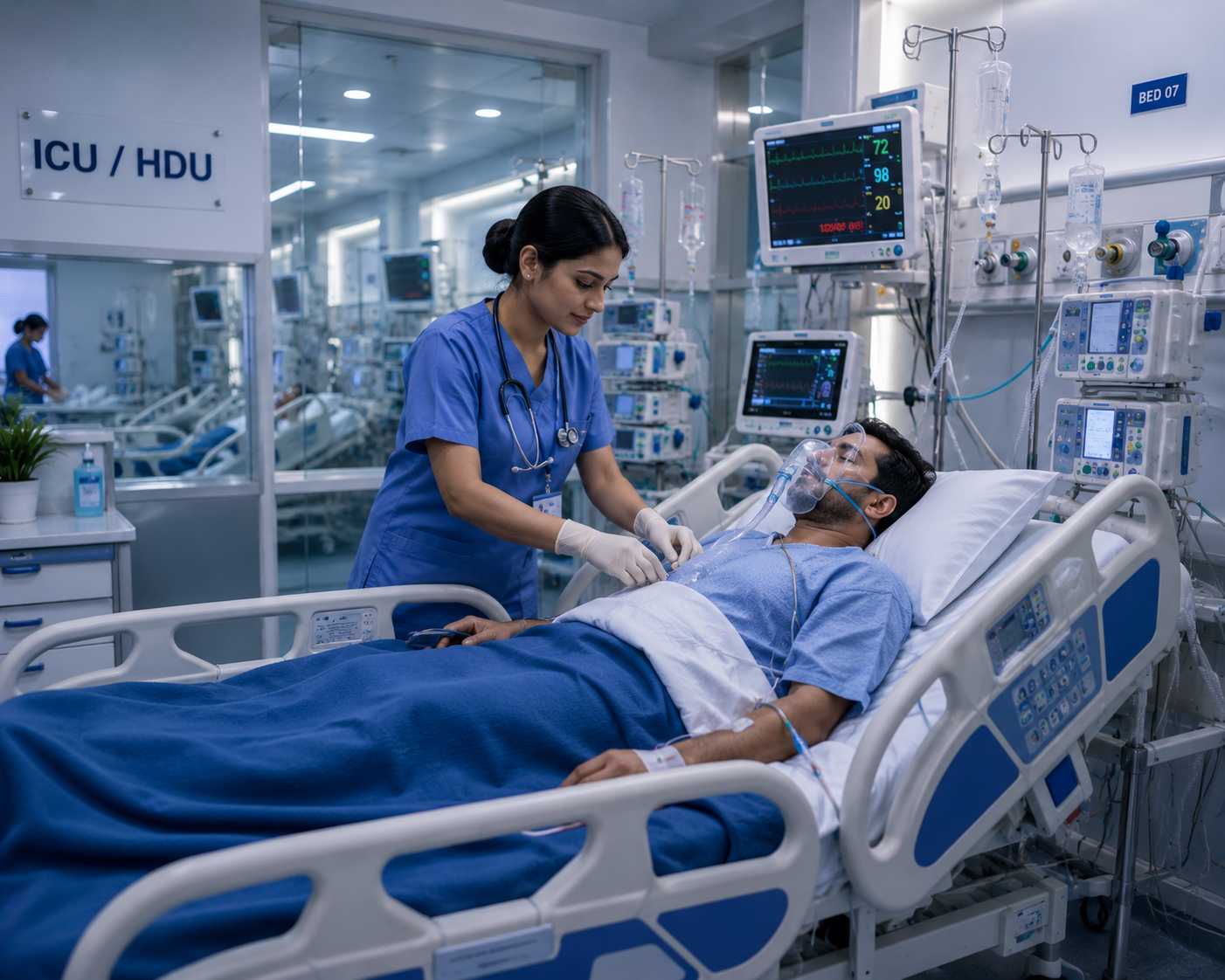
ICU in Lahore – Intensive Care & Critical Care at Pak Hospital
When a patient becomes critically ill, timely medical attention, continuous observation, and appropriate treatment are essential. Serious infections, breathing difficulties, complications after surgery, and other medical emergencies may require intensive care.
At Pak Hospital Lahore, our Intensive Care Unit (ICU) provides facilities for patients requiring close medical monitoring and treatment for serious health conditions.
Located at 33-K Shah Jamal, Lahore, Pak Hospital is a 50-bed multispecialty hospital offering ICU and High Dependency Unit (HDU) facilities, diagnostic services, inpatient care, and 24/7 emergency medical services.
ICU Facilities at Pak Hospital Lahore
An Intensive Care Unit is a specialised hospital area designed for critically ill patients who require closer observation and medical support than a general ward can provide.
Our ICU services are supported by:
- Medical assessment and monitoring of critically ill patients
- Monitoring of vital signs and clinical condition
- High Dependency Unit (HDU) facilities
- Laboratory investigations
- ECG and diagnostic imaging facilities
- Inpatient medical and surgical services
- Postoperative observation and care
- 24/7 emergency medical assessment
The availability of specific critical care interventions depends on the patient’s medical requirements and hospital resources.
Medical Conditions Requiring ICU Care
Patients may require intensive care when serious illness affects breathing, circulation, consciousness, or other vital functions.
Severe Respiratory Problems
Patients with severe pneumonia, respiratory infections, or significant breathing difficulties may require close observation, oxygen therapy, and additional respiratory support according to clinical needs.
Sepsis and Severe Infections
Sepsis is a life-threatening condition caused by the body’s abnormal response to infection, resulting in organ dysfunction. Early medical assessment, appropriate treatment, and monitoring are essential.
Serious Heart Conditions
Selected patients with heart failure, abnormal heart rhythms, or circulatory instability may require intensive monitoring and specialist assessment.
Postoperative Complications
Some patients require ICU care following major surgery, significant bleeding, breathing problems, or other postoperative complications.
Diabetic and Metabolic Emergencies
Conditions such as diabetic ketoacidosis, severe electrolyte imbalance, and significant blood glucose disturbances may require intensive medical observation and treatment.
Neurological Emergencies
Patients experiencing reduced consciousness, prolonged seizures, or serious neurological conditions may require intensive assessment and appropriate specialist referral.
ICU Patient Monitoring and Treatment
Patients admitted to an ICU may require frequent or continuous monitoring of:
- Heart rate and blood pressure
- Oxygen saturation and breathing
- Body temperature
- Level of consciousness
- Fluid balance and urine output
- Response to medical treatment
Treatment is individualised according to the patient’s diagnosis, clinical condition, and available medical resources.
ICU and HDU – What Is the Difference?
Both ICU and HDU provide closer medical observation than a standard hospital ward.
ICU: Intended for critically ill patients requiring intensive monitoring and medical intervention.
HDU: Provides enhanced monitoring and treatment for patients who require more support than a general ward but may not need the full level of intensive care.
Pak Hospital Lahore provides both ICU and HDU facilities, with admission decisions based on clinical assessment and available resources.
Infection Prevention and Patient Safety
Infection prevention is particularly important for critically ill patients.
Important practices include hand hygiene, appropriate cleaning and disinfection, aseptic techniques, safe handling of medical devices, and responsible use of antibiotics.
Families and visitors may be asked to follow additional precautions depending on the patient’s condition and hospital policies.
When Should You Seek Emergency Medical Attention?
Seek immediate medical assistance if a patient develops:
- Severe difficulty breathing
- Chest pain with sweating or fainting
- Sudden loss of consciousness
- Stroke symptoms, including facial weakness or difficulty speaking
- Prolonged or repeated seizures
- Severe confusion or unusual drowsiness
- Uncontrolled bleeding or signs of shock
Pak Hospital Lahore provides 24/7 emergency medical services for urgent assessment and appropriate treatment or referral.
Frequently Asked Questions
What does ICU stand for?
ICU stands for Intensive Care Unit, a specialised hospital area for patients requiring intensive medical monitoring and treatment.
Does every patient need ICU care after surgery?
No. Most surgical patients do not require ICU admission. The decision depends on the operation, medical condition, and postoperative recovery.
Does Pak Hospital have ICU and HDU facilities?
Yes. Pak Hospital Lahore provides both ICU and HDU facilities as part of its inpatient medical services.
Is ICU care available for emergency patients?
Pak Hospital provides 24/7 emergency medical assessment. ICU admission depends on the patient’s clinical condition, bed availability, and required level of care.
Contact Pak Hospital Lahore for ICU and Critical Care
If a patient requires urgent medical attention or you need information about ICU admission, contact Pak Hospital Lahore for assistance.