
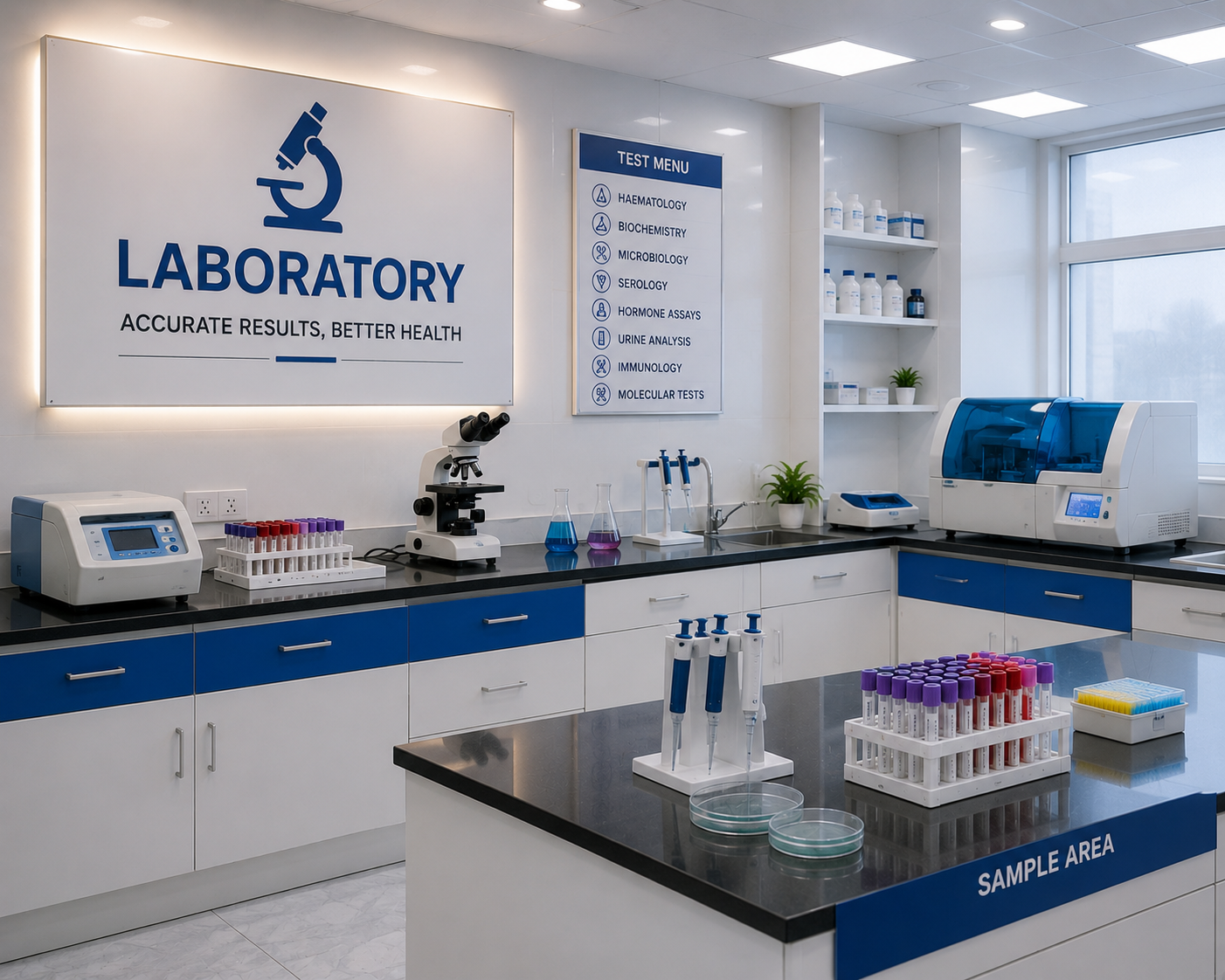
Medical Laboratory in Lahore – Diagnostic Lab Tests at Pak Hospital
Laboratory testing plays an essential role in disease diagnosis, health assessment, treatment planning, and monitoring medical conditions. Reliable laboratory investigations help doctors make informed clinical decisions and provide appropriate patient care.
If you are looking for a medical laboratory in Lahore, Pak Hospital provides in-house laboratory services to support routine health assessments, outpatient consultations, inpatient treatment, and emergency medical care.
Located at 33-K Shah Jamal, Lahore, Pak Hospital is a 50-bed multispecialty healthcare facility offering 24/7 laboratory and emergency medical services.
Laboratory Services at Pak Hospital Lahore
Our clinical laboratory supports the diagnosis and monitoring of various medical conditions through blood tests, urine examinations, and other diagnostic investigations.
Laboratory investigations may be requested for:
- Routine health assessments
- Diabetes diagnosis and monitoring
- Liver and kidney function assessment
- Anaemia and blood disorders
- Infectious disease screening
- Cholesterol and cardiovascular risk assessment
- Thyroid and hormonal disorders
- Preoperative investigations
- Pregnancy-related investigations
- Chronic disease monitoring
Common Laboratory Tests
Haematology – Complete Blood Count (CBC)
A complete blood count measures haemoglobin, red blood cells, white blood cells, and platelets. It helps doctors investigate anaemia, infections, platelet abnormalities, and other blood-related conditions.
Blood Glucose and HbA1c Tests
Blood glucose tests help diagnose and monitor diabetes. The HbA1c test reflects average blood glucose levels over approximately the previous two to three months and supports long-term diabetes management.
Liver Function Tests (LFTs)
Liver function tests help assess liver injury, bile flow abnormalities, and certain aspects of liver function. These investigations are commonly recommended for patients with jaundice, hepatitis, fatty liver disease, and other liver-related conditions.
Renal Function Tests (RFTs)
Renal function tests help evaluate kidney health through measurements such as creatinine, urea, and electrolytes. These investigations are particularly important for patients with kidney disease, diabetes, hypertension, and dehydration.
Lipid Profile
A lipid profile measures total cholesterol, LDL cholesterol, HDL cholesterol, and triglycerides. These results help doctors assess cardiovascular risk and monitor cholesterol management.
Thyroid Function Tests
Thyroid investigations, including TSH and Free T4, help evaluate thyroid-related conditions such as hypothyroidism and hyperthyroidism.
Urine Examination and Culture
Urine tests help investigate urinary tract infections, kidney disorders, and selected metabolic conditions. Urine culture may help identify bacterial infections and guide appropriate antibiotic treatment.
Infectious Disease Testing
Laboratory investigations may support the diagnosis of infectious diseases, including dengue fever, hepatitis B, hepatitis C, and other suspected infections.
The selection of appropriate tests depends on the patient’s symptoms, medical history, and clinical assessment.
Electrolyte Testing
Electrolyte tests measure substances such as sodium and potassium, which are essential for fluid balance, muscle function, nerve activity, and normal heart rhythm.
Patients can contact Pak Hospital to confirm the availability of specific laboratory investigations.
24/7 Medical Laboratory in Lahore
Pak Hospital provides round-the-clock laboratory services to support emergency patients, hospital admissions, surgical procedures, and routine medical care.
Our in-house laboratory supports multiple hospital departments, including:
- General Medicine
- Gastroenterology and Hepatology
- General Surgery
- Obstetrics and Gynaecology
- Paediatrics
- Urology
- Orthopaedics
- Emergency Medicine
- ICU and HDU
The availability and reporting time of specialised investigations may vary depending on the requested test.
Laboratory Testing Before Surgery
Preoperative laboratory investigations help doctors assess a patient’s medical condition before surgery and anaesthesia.
These may include blood counts, blood glucose, kidney function tests, and other investigations based on the patient’s age, medical history, and planned surgical procedure.
Laboratory Quality and Patient Safety
Reliable laboratory testing depends on appropriate sample collection, handling, processing, and reporting.
Important aspects of laboratory quality include:
- Correct patient identification
- Safe sample collection
- Proper sample labelling
- Appropriate sample storage
- Standardised testing procedures
- Laboratory quality control
- Accurate reporting
- Infection prevention and control
Laboratory results should always be interpreted alongside the patient’s symptoms, medical history, and clinical examination.
How to Prepare for a Laboratory Test
Proper preparation can help improve the reliability of laboratory results.
Before visiting the laboratory:
- Confirm whether fasting is required.
- Follow test-specific preparation instructions.
- Inform laboratory staff about current medicines and supplements.
- Do not discontinue prescribed medicines without medical advice.
- Bring your doctor’s prescription and relevant previous reports.
- Follow the recommended instructions for urine or other sample collection.
Not all blood tests require fasting. Preparation depends on the specific investigation requested.
When Should You Get Laboratory Tests?
Your doctor may recommend laboratory investigations if you experience:
- Persistent fever
- Unexplained fatigue or weakness
- Unexplained weight loss
- Excessive thirst or frequent urination
- Yellowing of the eyes or skin
- Suspected infection
- Symptoms of anaemia
- Changes in urinary habits
- Persistent digestive symptoms
Routine laboratory monitoring may also be recommended for patients with diabetes, hypertension, liver disease, kidney disease, and other chronic medical conditions.
Severe or rapidly worsening symptoms require immediate medical assessment rather than waiting for routine laboratory results.
Frequently Asked Questions
Is Pak Hospital Laboratory open 24 hours?
Yes. Pak Hospital provides 24/7 laboratory services to support routine, inpatient, and emergency medical care. Availability of specific tests may vary.
Do all blood tests require fasting?
No. Fasting requirements depend on the requested laboratory investigation.
Can I drink water before a fasting blood test?
Plain water is generally permitted before many fasting blood tests. However, patients should follow test-specific instructions.
How long does it take to receive laboratory reports?
Reporting time depends on the type of investigation and laboratory processing requirements.
Does an abnormal laboratory result always indicate disease?
No. Laboratory results must be interpreted by a healthcare professional alongside clinical findings and medical history.
Should I stop taking medicines before a blood test?
Do not stop prescribed medicines without consulting your treating doctor.
Visit Pak Hospital Laboratory in Lahore
Whether you require routine blood tests, urine examinations, diabetes monitoring, liver function tests, or other diagnostic investigations, Pak Hospital provides laboratory services within a multispecialty healthcare setting.
Contact our medical laboratory in Lahore for information about available investigations, test charges, sample collection requirements, and reporting times.